
Smart Home Upgrades That Reduce Energy Bills (Not Just Look Cool)
In 2026, upgrading your home with smart technology is no longer just about convenience or showing off the latest gadgets. With energy prices remaining high and homeowners looking for practical ways to cut monthly bills, the focus has shifted to smart home upgrades that deliver measurable return on investment (ROI) through real energy savings.
This comprehensive guide reveals the best smart home upgrades for energy savings that actually pay for themselves — often within 1–3 years — while improving comfort and reducing your carbon footprint.
Affiliate Disclosure: This post may contain affiliate links, meaning we earn a commission if you purchase through them – at no extra cost to you. We only recommend products or services we believe add value to our readers.
Why Smart Home Energy Upgrades Are Trending in 2026
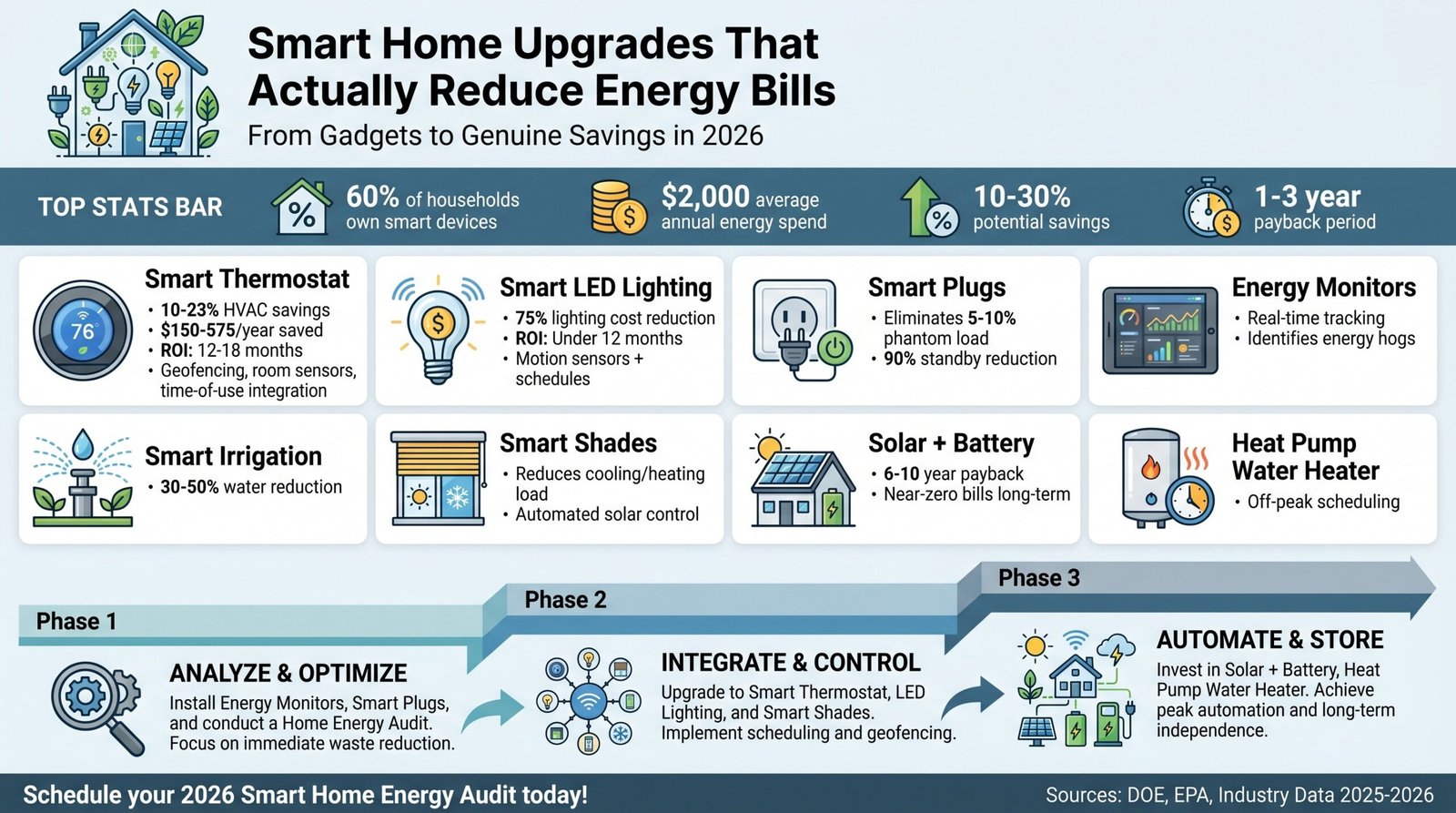
Smart home adoption has crossed the mainstream threshold. Over 60% of households now own at least one smart device, and the motivation has evolved. People are no longer buying smart gadgets purely for novelty. Rising electricity, gas, and heating costs have made energy efficiency a top priority.
According to recent data, the average U.S. household spends over $2,000 annually on energy. Strategic smart upgrades can reduce this by 10–30% or more, depending on implementation. This creates a strong smart home ROI — turning technology into a genuine financial investment rather than an expense.
The best smart home upgrades for energy savings combine automation, real-time monitoring, and intelligent control to eliminate waste without sacrificing comfort.
1. Smart Thermostat – The Highest ROI Upgrade
A smart thermostat is usually the single best starting point for energy savings.
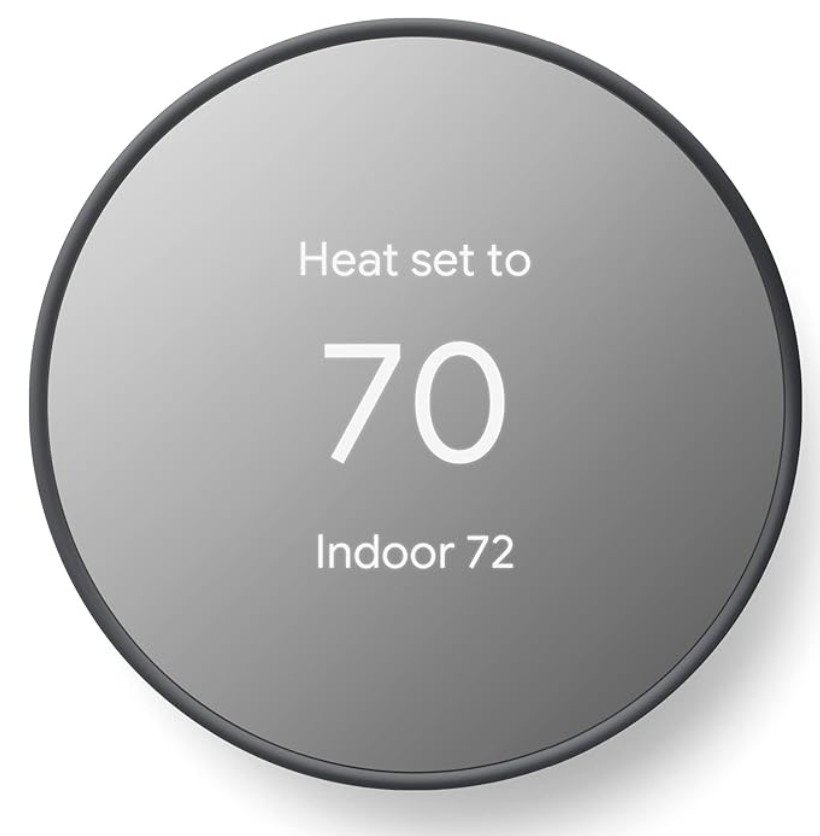
Devices like Google Nest Learning Thermostat, Ecobee, or Emerson Sensi use sensors, occupancy detection, and AI learning to automatically adjust temperature when you’re away or asleep.
Real-world savings: Many users report a 10–23% reduction in heating and cooling costs. With average annual HVAC costs around $1,500–$2,500, that translates to $150–$575 saved per year.
Browse smart thermostat options here:
Smart Features That Actually Save Money
Modern smart thermostats go far beyond basic programmable schedules. Here are the key energy-saving features that deliver the biggest reductions in heating and cooling costs:
- Geofencing (Location-Based Automation): The thermostat uses your smartphone’s location to detect when you leave home and when you return. It automatically switches to an energy-saving “Away” mode while you’re gone and begins pre-heating or pre-cooling shortly before you arrive. This eliminates the biggest source of waste — running the HVAC at full comfort settings for an empty house. Many users save 10-15% on HVAC costs from geofencing alone.
- Room-Specific Sensors (e.g., Ecobee) Instead of relying on a single temperature reading in the hallway or living room, smart sensors placed in key rooms (bedrooms, kitchen, office) give a more accurate picture of whole-home comfort. The system can focus heating or cooling exactly where people are, avoiding over-conditioning unused areas. This is especially valuable in larger or multi-story homes and can add another 5-10% in savings.
- Energy Reports and Usage History: Detailed weekly and monthly reports show exactly how much energy your HVAC system is using and when. You can see the impact of your settings, identify unusual spikes, and get personalized recommendations for further optimization. This feedback loop helps homeowners make smarter decisions and maintain long-term efficiency.
- Integration with Utility Time-of-Use (TOU) Rates Many utilities now charge higher rates during peak hours (e.g., 4–9 PM). Smart thermostats can automatically adjust temperatures during expensive peak periods and shift usage to cheaper off-peak times. Some models even participate in utility demand-response programs, where the utility can slightly adjust your settings during extreme grid demand in exchange for bill credits or rebates.
ROI: Typically pays for itself in 12–18 months. Many utility companies offer rebates, further shortening payback time.
Pro Tip: Pair your smart thermostat with smart vents or zoning systems for even greater control in larger homes.
2. Smart LED Lighting + Automated Controls
Lighting upgrades offer quick wins with excellent ROI.
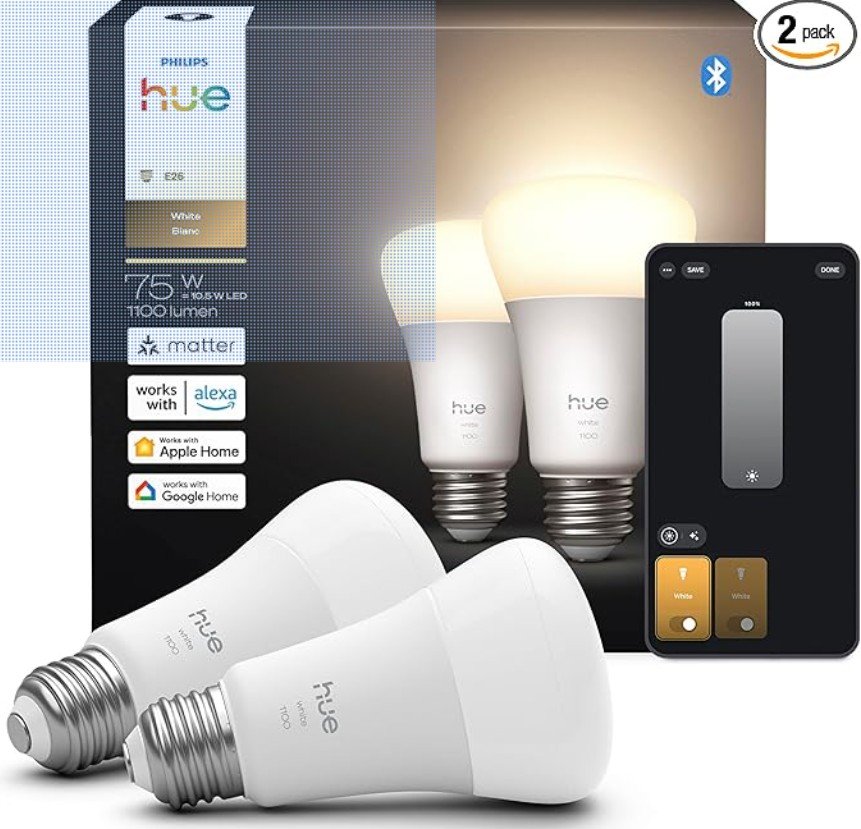
Modern smart bulbs (Philips Hue, TP-Link Kasa, Govee) use far less energy than traditional incandescents while lasting 15–25 times longer. Adding automation multiplies the savings.
Energy-saving strategies:
- Schedules and timers (lights off when rooms are empty)
- Motion sensors in hallways, bathrooms, and closets
- Daylight harvesting (dim or turn off lights when natural light is sufficient)
- Integration with voice assistants or smart home hubs
Savings potential: Replacing all bulbs can cut lighting costs by 75%. Automation prevents “vampire” waste from forgotten lights, adding another 10–20% reduction.
ROI: Often under 12 months, especially when buying in bulk during sales.
Link across to explore smart LED lighting options.
3. Smart Plugs and Power Strips for Vampire Energy Reduction
Many devices continue drawing power even when “off” — this phantom load can account for 5–10% of your bill.
Smart plugs let you schedule or remotely turn off appliances, chargers, and entertainment systems completely.
Best uses:
- Coffee makers and kitchen appliances
- TVs, soundbars, and gaming consoles
- Printers and computer peripherals
Savings: Can reduce standby power consumption by up to 90% on controlled devices.
4. Smart Energy Monitors and Whole-Home Dashboards
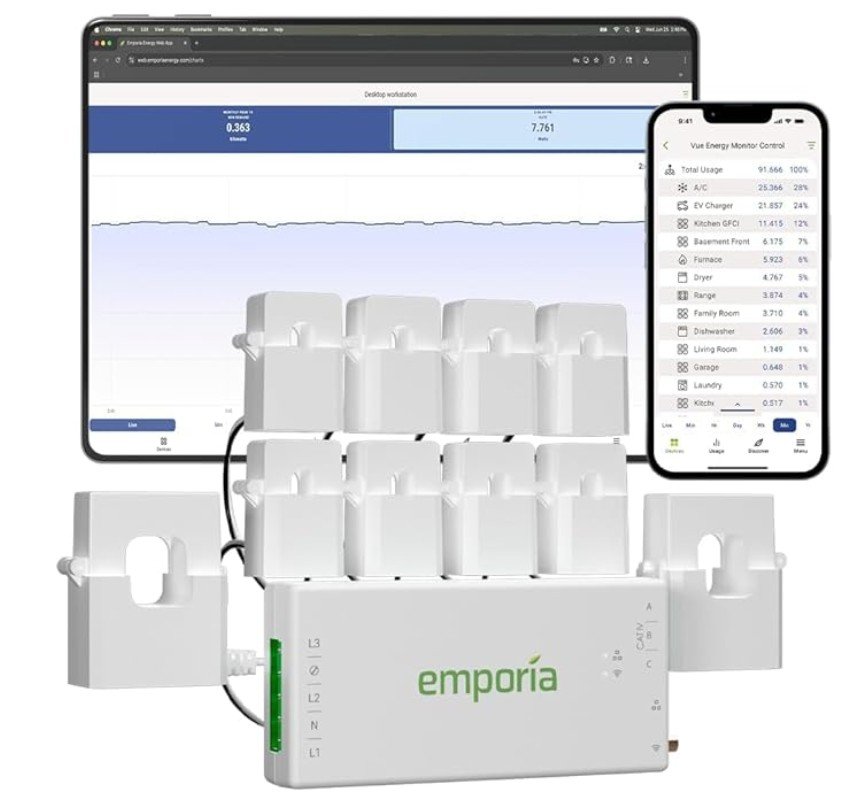
You can’t manage what you don’t measure. Whole-home energy monitors (Sense, Emporia, or utility-provided devices) show real-time usage and identify energy hogs.
Benefits:
- Discover which appliances use the most power.
- Set usage alerts and budgets
- Track savings over time
- Identify opportunities for further upgrades.
This data-driven approach helps prioritize future investments for maximum ROI.
Click here to explore Smart Home Energy Monitoring Systems
5. Smart Irrigation Systems
For homeowners with lawns or gardens, smart sprinkler controllers (Rachio, Orbit) are game-changers.
They use weather data, soil moisture sensors, and local forecasts to water only when necessary, avoiding overwatering.
Savings: Many users cut outdoor water usage by 30–50%. In drought-prone areas or with high water rates, payback is very fast.
6. Advanced Insulation + Smart Windows/Shades
Sometimes the smartest upgrade isn’t a gadget at all.
High-quality insulation, energy-efficient windows, and smart motorized shades or blinds work together with your smart systems.
Smart shades can automatically close during peak sun hours to reduce cooling load or open to capture passive solar heat in winter.
7. Solar Integration with Battery Storage and Smart Inverters
For the biggest long-term savings, pair solar panels with battery storage (Tesla Powerwall, Enphase) and smart energy management.
Modern systems intelligently decide when to store, use, or sell excess power back to the grid based on rates and weather.
ROI: With federal tax credits and state incentives still available in 2026, full solar + battery systems can achieve payback in 6–10 years, then provide near-zero energy bills for decades.
8. Heat Pump Water Heaters + Smart Controls
Heat pump water heaters are far more efficient than traditional electric or gas models. Adding smart scheduling ensures they run during off-peak hours.
Implementation Strategy: Where to Start for Best ROI
Phase 1 (Quick Wins – Under $500):
- Smart thermostat
- Smart LED bulbs + plugs
- Basic energy monitor
Expected savings: 8–15% in the first year.
Phase 2 (Medium Investment):
- Smart irrigation
- Additional sensors and automation
- Smart shades or vents
Phase 3 (Major Upgrades):
- Insulation improvements
- Full solar + battery system
Calculating True Smart Home ROI
To evaluate any upgrade:
- Calculate upfront cost (after rebates/incentives)
- Estimate annual energy savings (use manufacturer calculators or energy monitor data)
- Factor in maintenance, lifespan, and increased home value
- Consider non-financial benefits: comfort, convenience, resale appeal, and environmental impact.
Many upgrades also qualify for utility rebates, state incentives, or federal tax credits, dramatically improving ROI.
Common Mistakes to Avoid
- Buying gadgets without a plan (focus on problems first)
- Ignoring compatibility with existing systems
- Over-automating without monitoring actual usage
- Neglecting basic efficiency (insulation, sealing leaks) before adding tech
The Future of Smart Energy Homes
In 2026 and beyond, AI-powered systems will become even more predictive, automatically optimizing energy use based on weather, occupancy patterns, utility rates, and user preferences.
Homes will shift from passive consumers to active participants in the energy grid through demand response programs that reward you for reducing usage during peak times.
Final Thoughts on Smart Home Upgrades that Reduce Energy Bills
The best smart home upgrades for energy savings deliver more than cool features — they provide measurable financial returns, greater comfort, and peace of mind. By focusing on high-ROI solutions like smart thermostats, efficient lighting, monitoring tools, and strategic major upgrades like solar, you can significantly lower your energy bills while future-proofing your home.
Start small, measure results, and scale up. Every percentage point of savings compounds over the years, putting real money back in your pocket.
Ready to begin your energy-saving smart home journey?
Explore practical guides, product recommendations, and step-by-step implementation plans tailored for homeowners who want results, not just gadgets.
One of the smartest renovations to implement in your house is to reduce its energy consumption.
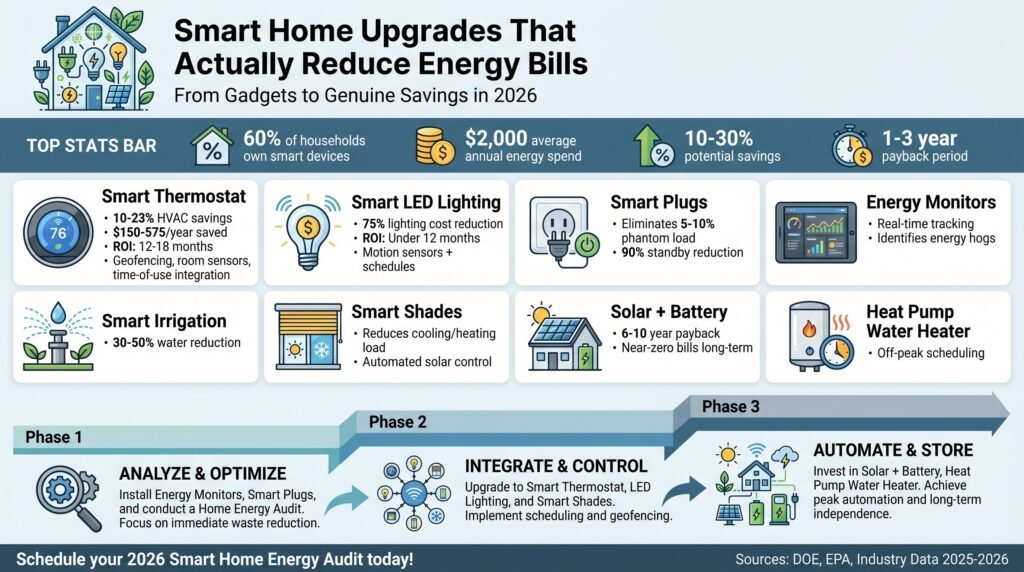
Smart home upgrades that reduce energy bills: Smart Thermostat + Smart LED Lighting + Smart Energy Monitors = Smart Energy Homes
Leave a Reply